BusinessPermanent article
Keystone Agro: Extending Georgia's Blueberry Season from May to August
Around 85% of Georgia's blueberry crop is harvested between the second week of June and the second week of July. Keystone Agro is working to extend that concentrated supply window.
Keystone Agro: Extending Georgia's Blueberry Season from May to August
Around 85% of Georgia's blueberry crop is harvested between the second week of June and the second week of July. Keystone Agro is working to extend that concentrated supply window. By combining varieties with different ripening periods and multiple growing systems, the company harvests from mid-May through the beginning of August.
Most of Georgia's blueberry harvest is concentrated within a relatively short period. According to Keystone Agro, around 85% of the country's crop is picked between the second week of June and the second week of July.
Keystone's strategy is to widen that supply window. The company combines varieties with different ripening periods and several growing systems to extend harvesting across approximately 12 weeks.
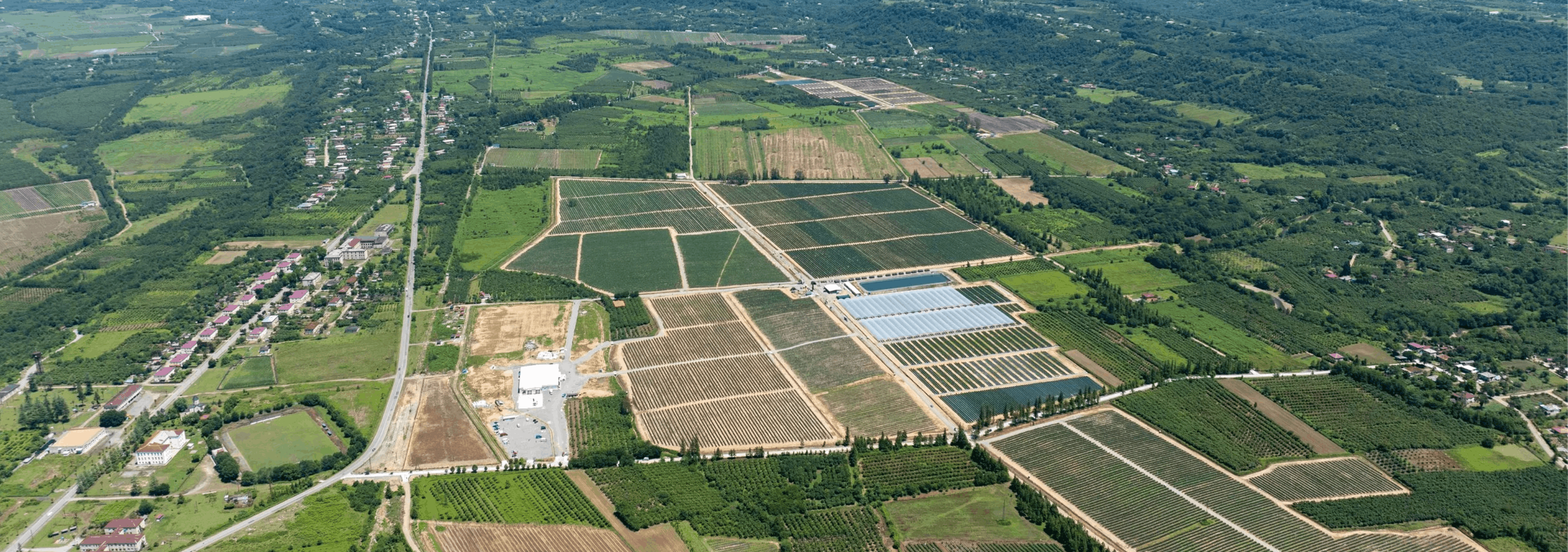
More than 200 hectares in the Caucasus foothills
Keystone Agro grows, processes and packs blueberries across more than 200 hectares in the foothills of the Caucasus.
The area has a long history of tea production. Tea plantations there were abandoned following the collapse of the Soviet Union, and part of that agricultural land has since been brought back into production.
Keystone now harvests blueberries from mid-May through the beginning of August.
How the season is extended
Variety selection is one of the main tools behind Keystone's longer harvest window.
The company grows patented Fall Creek varieties with different ripening periods, allowing harvesting to extend beyond Georgia's concentrated four-week peak.
Since 2023, Keystone has also partnered with Prize Superfruits. According to the company, it is one of the larger growers of high-chill Sekoya Club varieties.
Genetics are combined with several growing systems, including pots, tunnels and shade nets.
A new 12-hectare block under tunnels and shade nets forms part of the same strategy. The protected systems give Keystone additional tools for managing production towards the earlier and later ends of the season.
Technology and crop management
Precision agriculture and data-driven crop management are also part of Keystone's production model.
The company uses remote sensing technologies to analyse crop health and manage its plantations and works with international agronomists.
Keystone says its approach also focuses on minimizing pesticide use and improving agricultural practices around water use, soil conservation and environmental impact.
Traceability
Traceability is another area of focus for Keystone and the wider grower network it helped establish.
The model described by the company includes a product passport containing cultivation and post-harvest information.
The purpose is to give buyers greater visibility into the origin of the fruit and how it has been grown and handled through the production process.
The Georgia Blueberry Growers Association
Keystone Agro played a leading role in establishing the Georgia Blueberry Growers Association.
The association holds weekly coordination calls involving growers and local and international agronomists. Its activities also include machine-harvesting demonstrations, field scanning, worker training and connecting growers with agricultural technology providers.
It also coordinates with USAID, CNFA and relevant government bodies on challenges affecting the wider blueberry sector.
For Keystone, extending the blueberry season is therefore not based on a single intervention. The strategy combines genetics, growing systems, protected infrastructure and data-driven crop management.
For international buyers, the practical result is a wider sourcing window running from mid-May through the beginning of August. Availability of specific varieties and volumes, particularly at the earliest and latest points of the season, should still be confirmed by calendar week when planning supply programmes.
Contact Keystone Agro: [link]
Publisher destination
Continue to www.keystoneagro.com
This is the single followed external link included with this paid article.
Visit www.keystoneagro.comTake this position
This position is still for sale.
Place a new article for $305 to move ahead of this one on the permanent board.